“Orrrrrr-eh-hayy-a.” she said, her ‘r’ rolling almost to the point of my wondering if her tongue had gotten stuck. I’d just pointed to myself and said, “Amy.” Communicating was easy, right? Nope. I later learned that “Oraheya” was the name given to me, not the name of the lady I thought had just introduced herself as that.
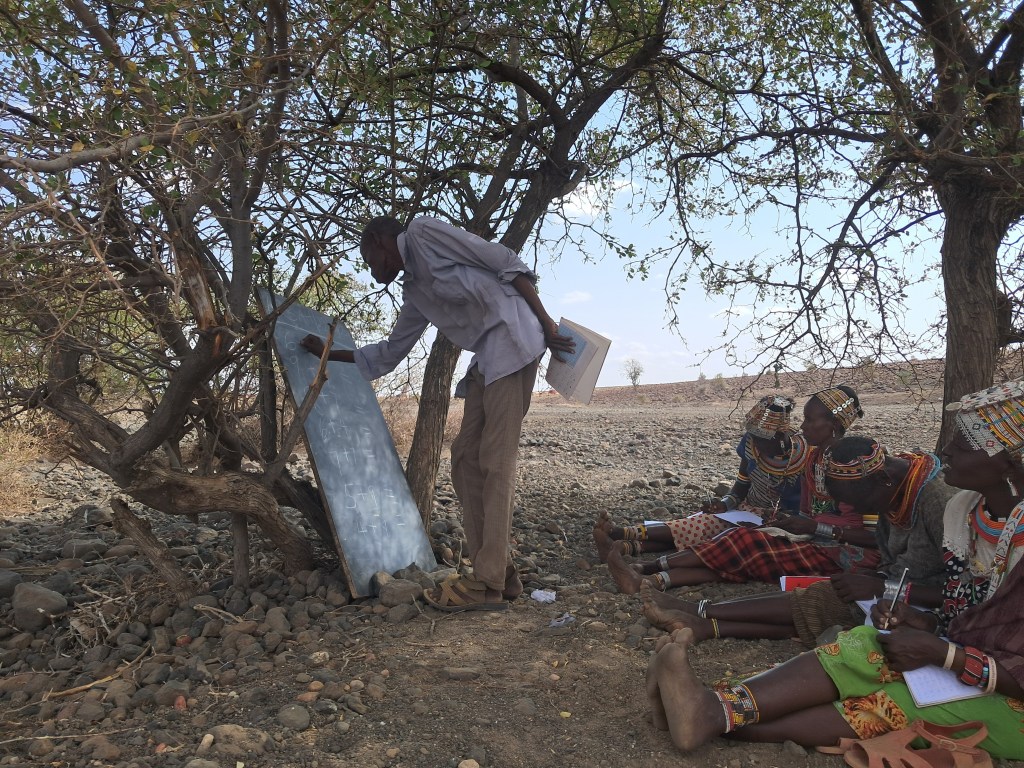
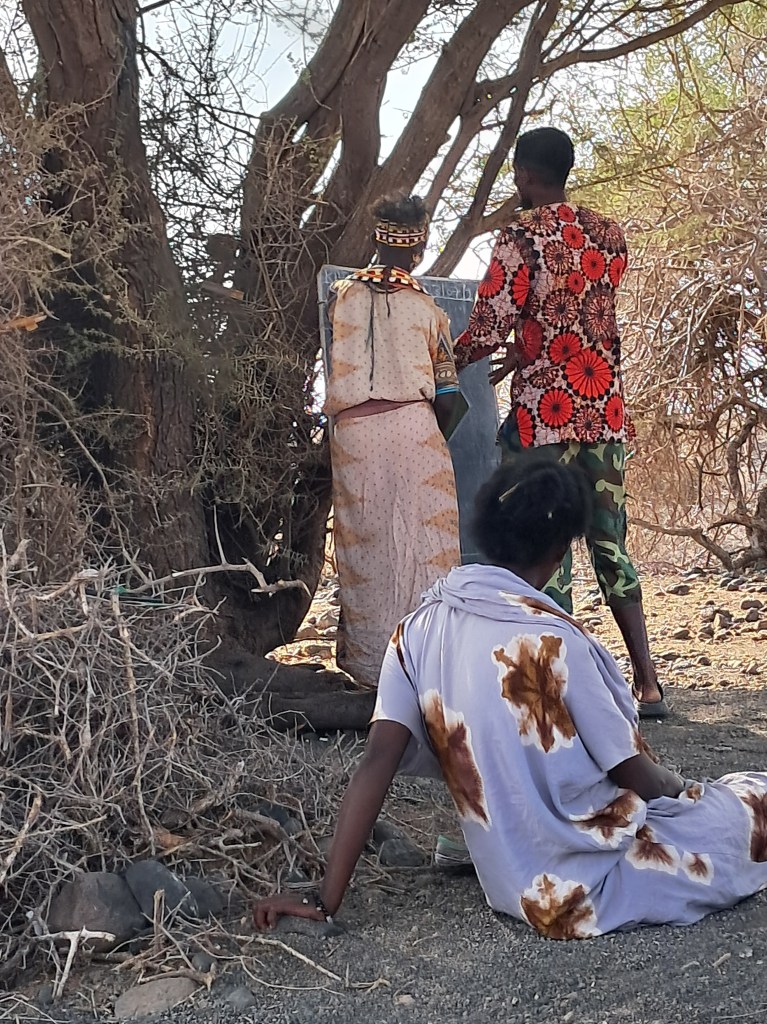
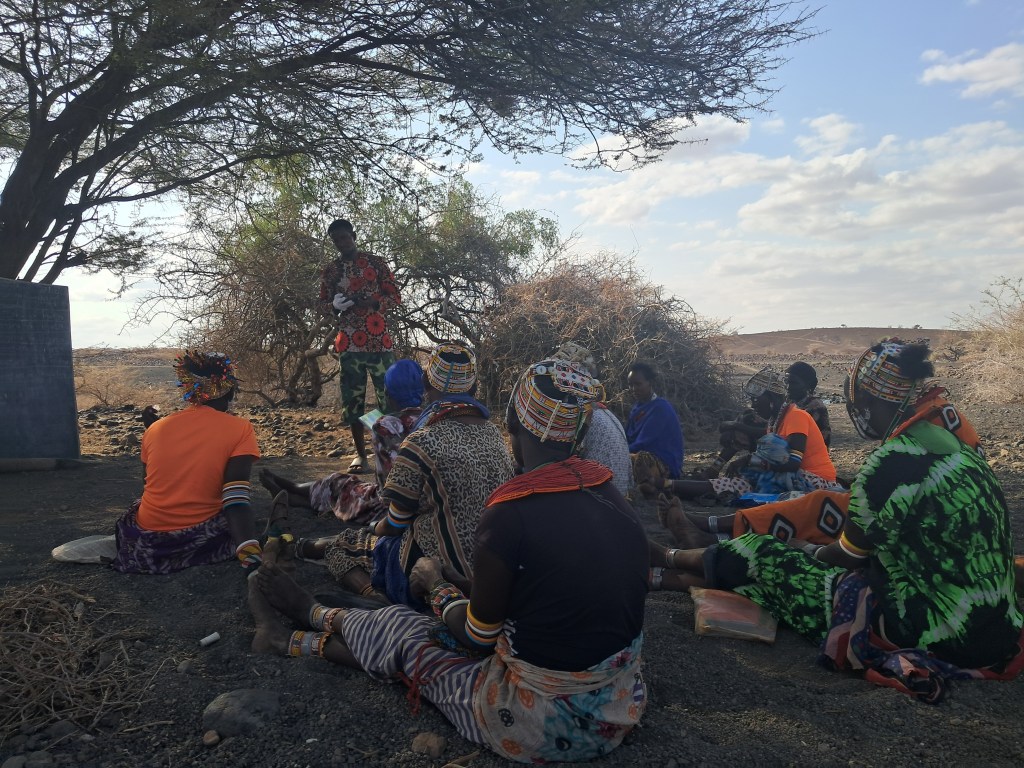
I first met Kubo the day before when I’d attended literacy class. My host, D, and I had ridden the four minutes on the piki (motorcycle) from the mission station to the classroom: a chalkboard under a tree. We approached four women sitting with their legs straight out in front of them, ankles crossed and a lined notebook on each of their laps. The whiteboard had three letter blends written out in boxes, the ladies copying their shapes meticulously onto their own pages. Their Mwalimu (teacher) was off to the side and welcomed me in English, greeted D in Swahili, then continued teaching lesson in Rendille. Each lady passed their notebook to him for on-the-spot grading before he erased the board and replaced it with the beginnings of the next lesson: addition.
7+2=
8+1=
4+3=
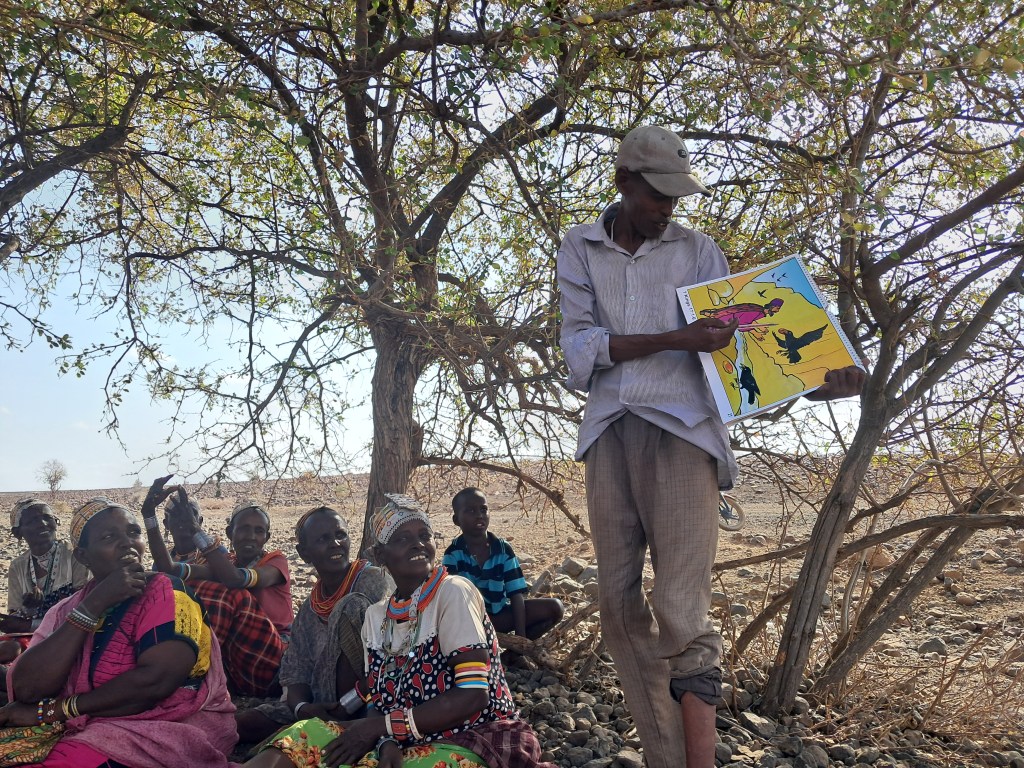
He stood in front of them and reminded them how to approach these sums in their minds as they worked to memorize their basic math facts: pick up seven rocks in one hand, two in the other, then transfer them all to one hand and count the new total. Fingers racked through the dirt, scooping up small stones as they enacted this well practiced strategy. Two more ladies joined the class just as notebooks with a new problem set were beginning to be turned in. As the last notebook was passed to Mwalimu, the seventh and final student of the day approached the class with a giant smile spread across her face: Kubo. Her grand entrance was met with excited chatter in greetings being passed her way. She had missed writing, she had missed arithmetic, but she was here for the most important lesson: the Bible story. Mwalimu narrated the story slowly, stopping to ask questions, pausing to translate for me what the women were sharing. At the end, he showed a simple illustration of the story of Elijah and the ravens he’d just walked through with his seven diligent women. At this point, discussion moved through him from the ladies to me as they shared how thankful they were that D had initiated these literacy classes for their benefit. “It’s like we were blind, but now our eyes are open. We thank God.” Kubo expressed.
D had initiated these literacy classes almost a year and a half ago convicted to provide the opportunity for the people in his area to learn to read in their own heart language. About thirty-five women signed up. No men. Just women. Even though the classes are held in the language he is still learning, he shows up each day he can. When the classes break for school holiday, or cultural celebrations, he walks door to door setting the start date of the next session together. When only two women show up to each class, he heads out and asks questions, learning that they needed to walk far for firewood today, or there is need to visit the other well, so they weren’t able to attend. Diplomas will be awarded in just over six months time- a Rendille Bible for each graduating student.
I had no idea in that moment that is late coming joyful woman would become a friend in the days to come of my visit to this mission station in the remote corners of Northern Kenya camped on the southern edge of the Chalbi Desert.
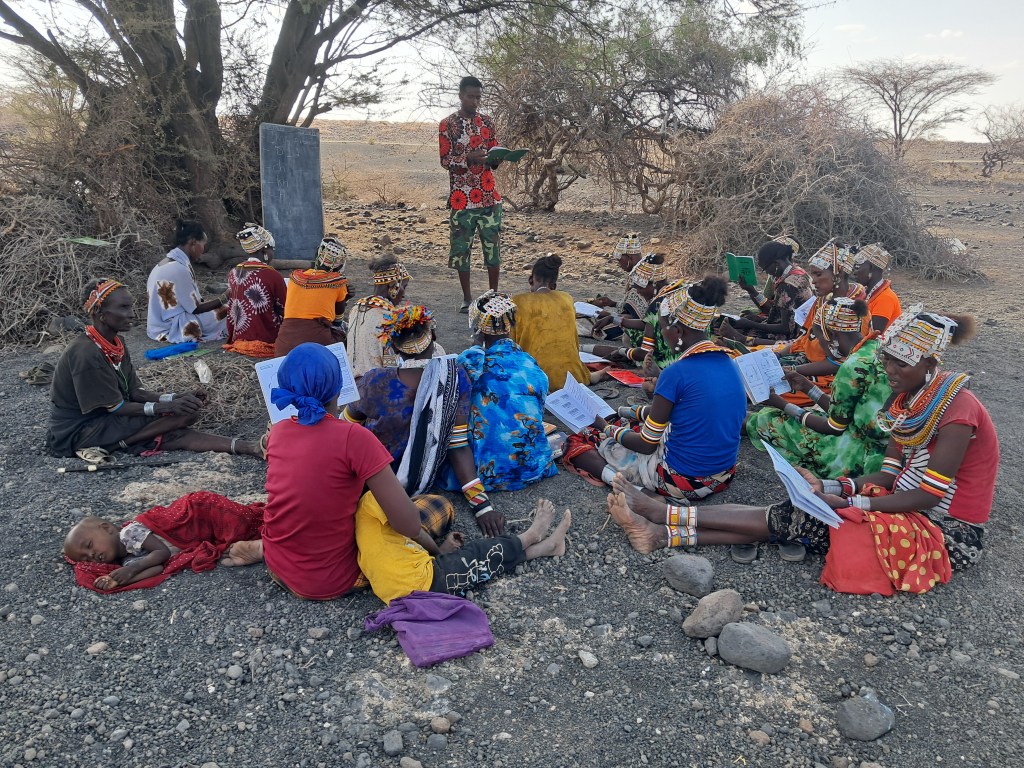
When this class drew to a close, D and I got back on the piki and rode another 6 minutes to the location of the second class that always starts later and runs longer. This teacher, B, was about 30 years younger than Mwalimu. This tree was a little bigger, this class much fuller, the chalkboard the same size. I could feel the energy shift in the wind jingling the women’s headdresses, matched in the energetic content delivery of B. I pondered his oral teaching style as he moved to the reading section of his lesson, asking the women to follow along as he reviewed letter blend sounds differentiating between ch and kh, the first how you might say cheese, the second the sound in the back of your throat when you sneeze.
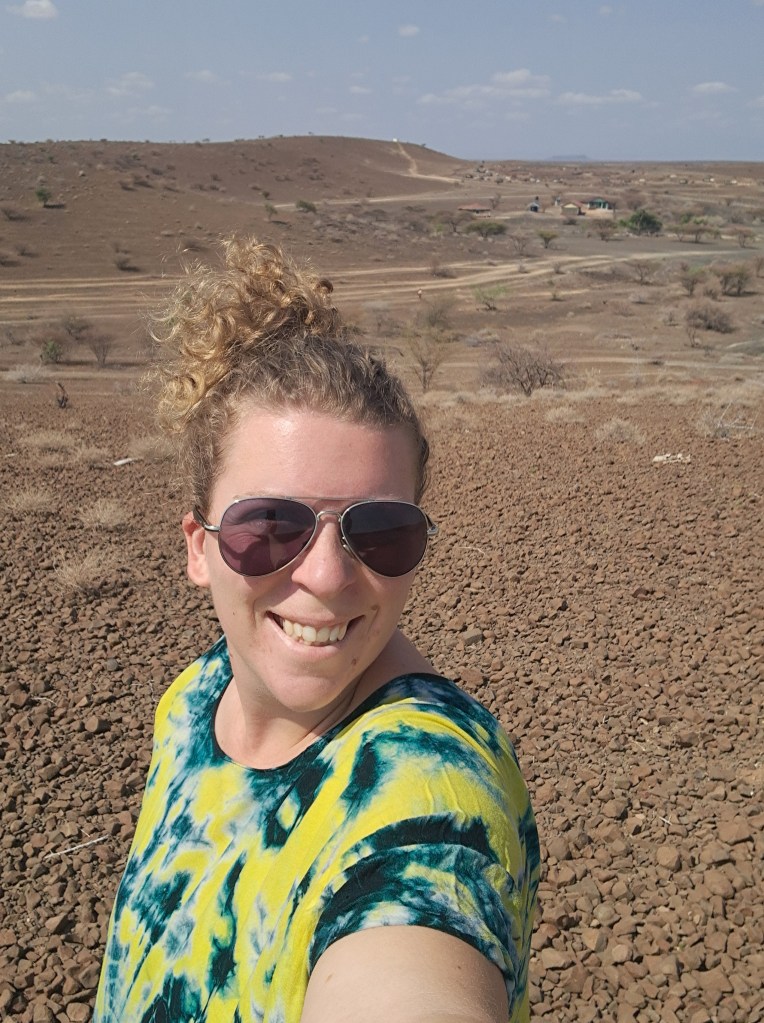
The next morning I took a walk out into the wilderness and pondered the benefits of learning to read at 30, 40, 50 years old. A phone. They could operate their own phones, storing different numbers under the actual contact name of the person it belonged to. Shopping. They could ensure a price was fair and with their own mental math verify the correct change for a large bill given. Homework. They could help their children now attending school with their work, and could help fill out forms to send them to university, allowing daughters to gain an education, not just get married off much too young. But most importantly: Scripture. An audio bible is available in their language, but that requires electricity and a device they know how to operate and navigate to find different passages. They can grow in their faith, and KNOW God more and more through the devouring of His word. These classes are exactly what the lady earlier in the day had described: an opening of the eyes of the blind.
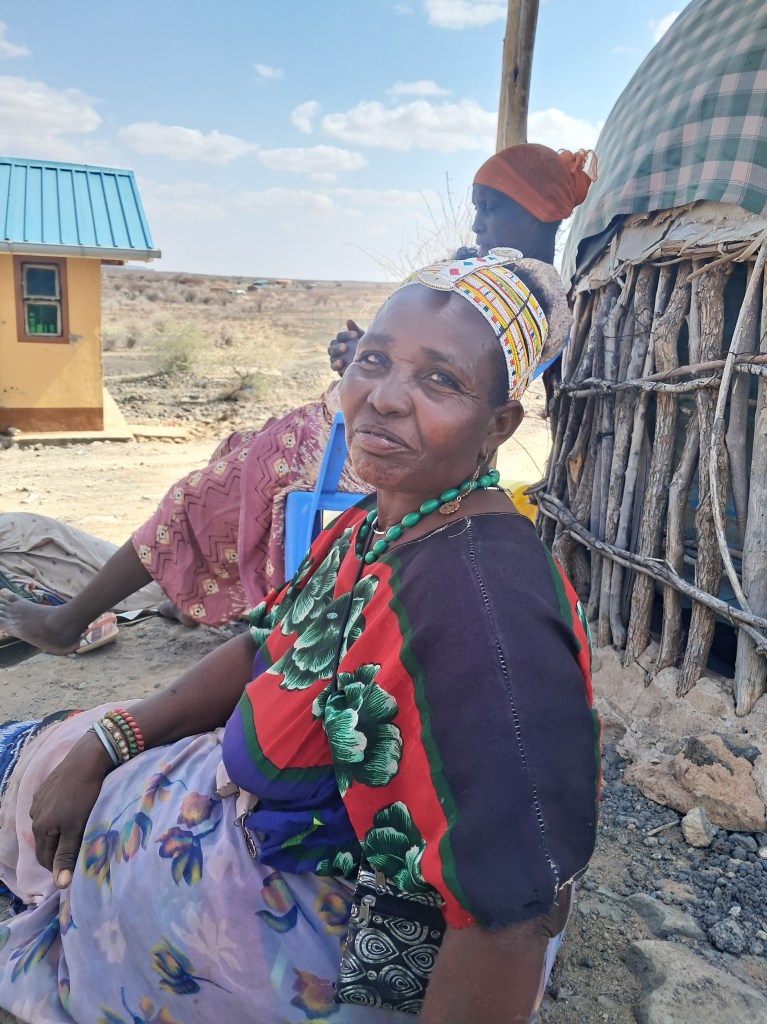
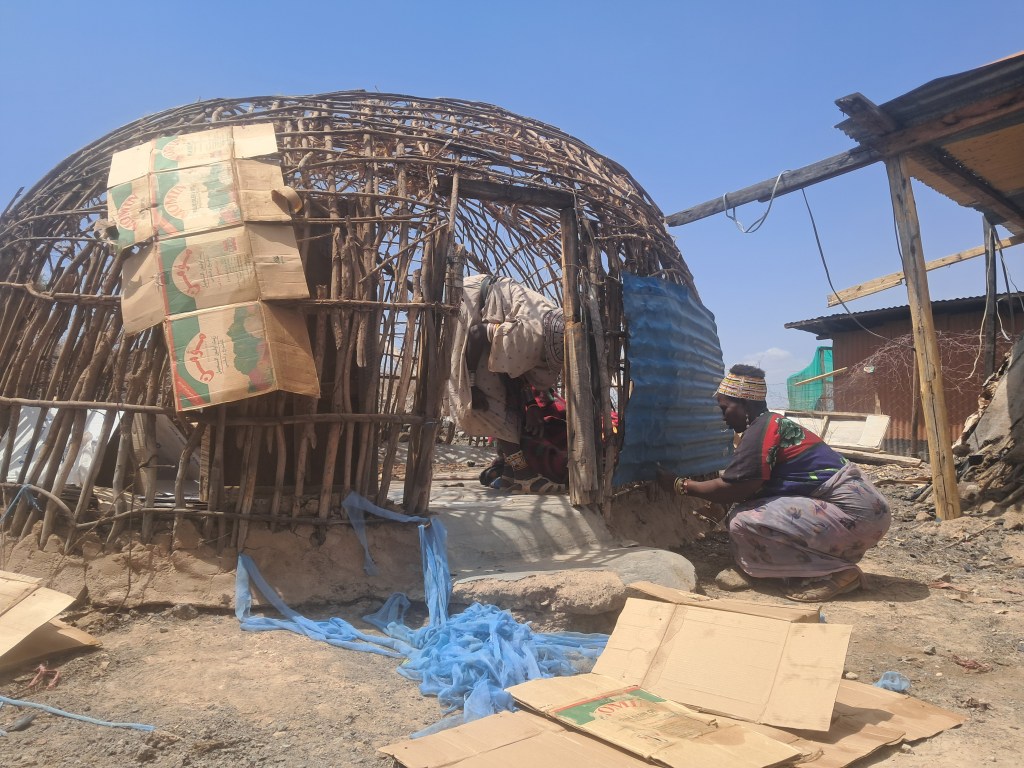
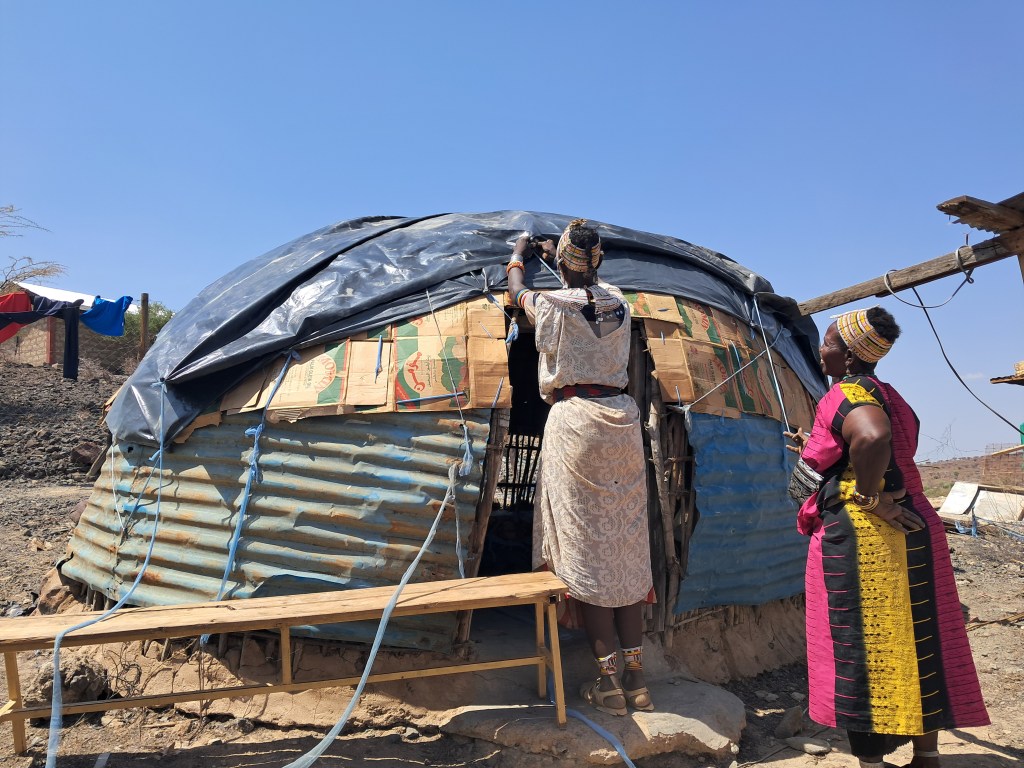
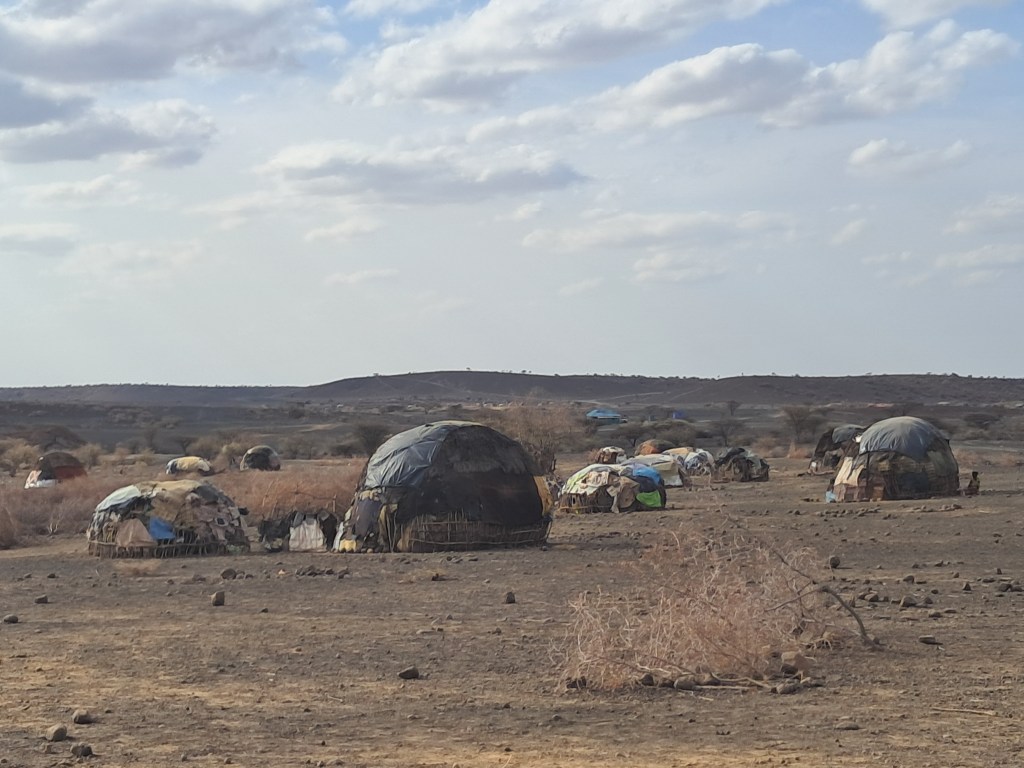
This was on my mind as I wandered back into the mission station to loud excited chatter- the same sound that had erupted when Kubo had walked into literacy class yesterday. The same sound because it was in fact, Kubo! The mission station is six buildings in a U shaped formation, three permanent, three temporary. Two small cinderblock permanent structures, one aluminum sheet kitchen. The other three buildings are manyattas: a stick dome house with cardboard, cloth, or thatched coverings for the roof and walls. It was gathered in and around the cleared off stick-dome skeleton of the second manyatta where I found Kubo and two other chattering ladies.
Curious, I sat down on the stoop. Kubo another lady were turning a mosquito net into rope, one holding the net, the other dragging a razor blade through from end to end. Stretch, slice, stretch, slice. After 5 minutes of watching I found the pattern. I reached over and said ‘mimi kufanya’ ‘I do’.
Their swahili is more limited than mine, but the only chance of common language. I reached over and found a better common language: action! “Awhhhhwhey!” Kubo exclaimed as my fingers mimicked the movements of the lady I replaced. She moved to join the third gal and together they began the sewing process. There is no better word for what they did! There was a true needle, threaded through the eye with mosquito net ropes that was poked in through the cardboard being held on the outside, around the stick skeleton inside and out once more.
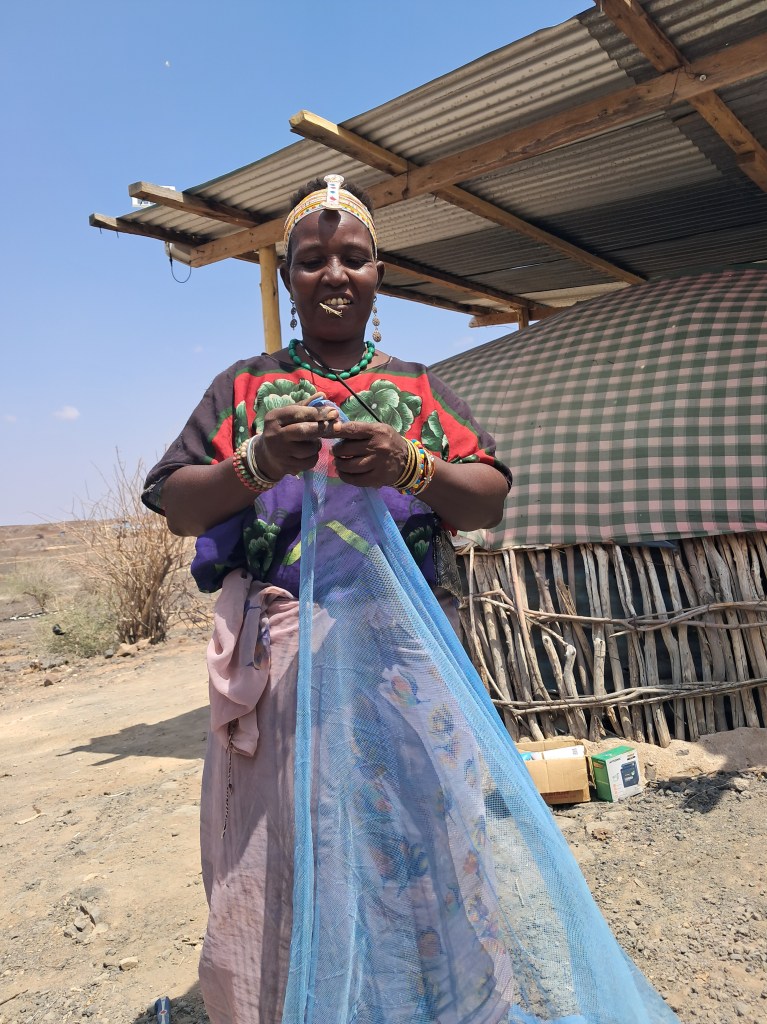
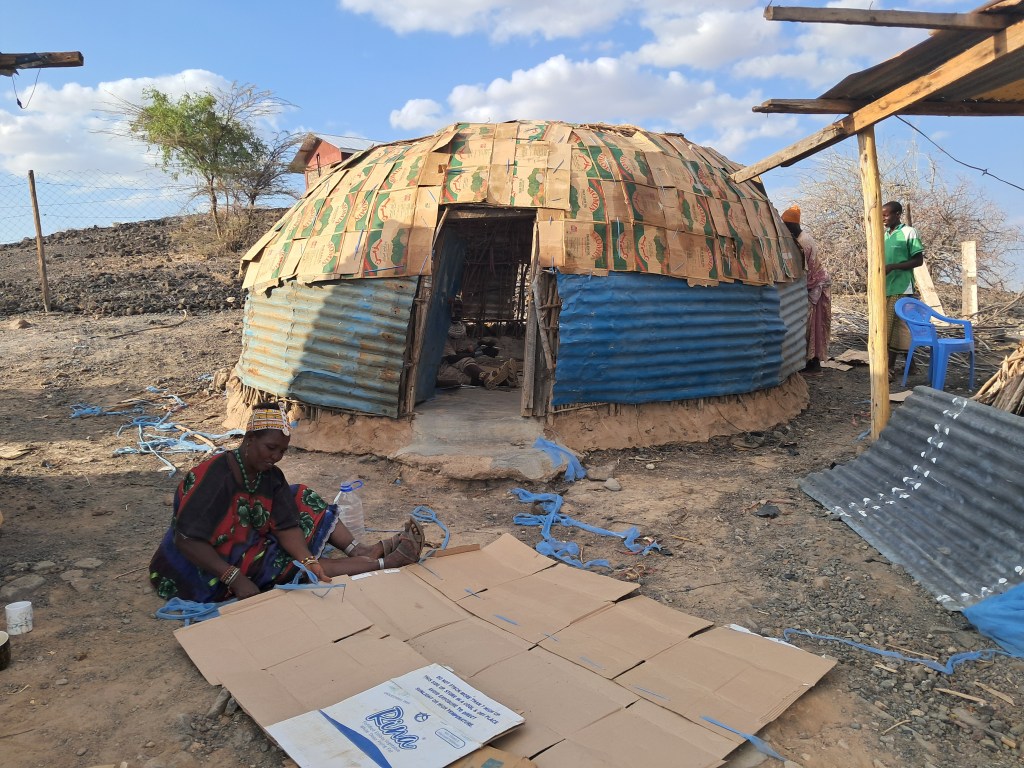
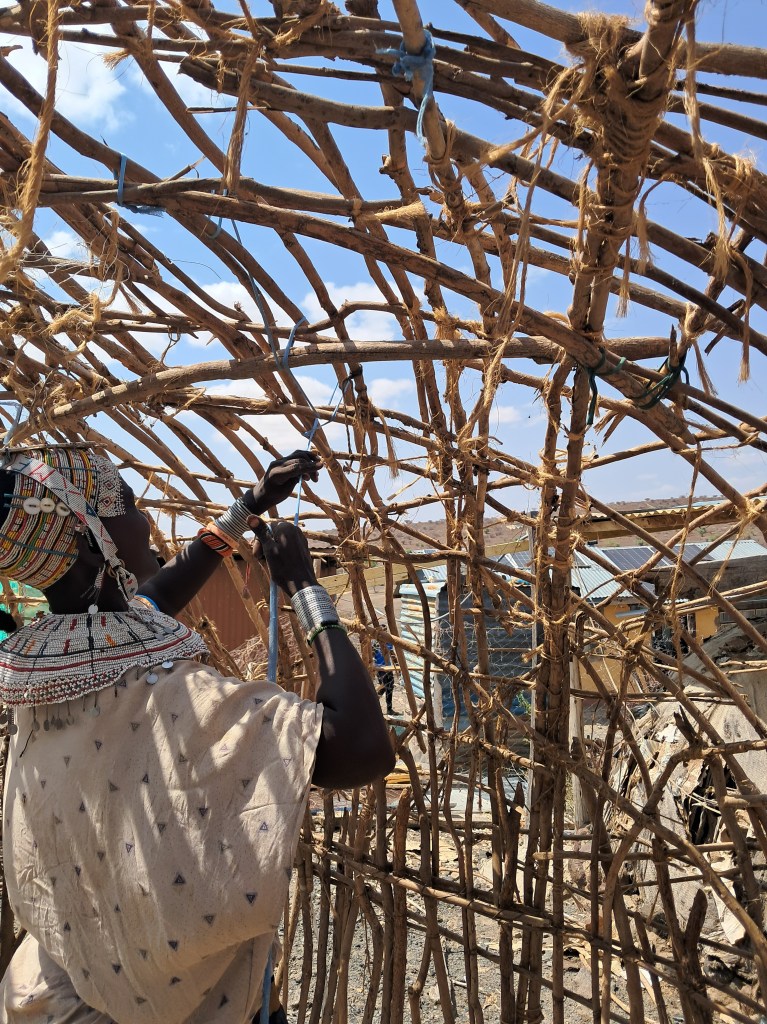
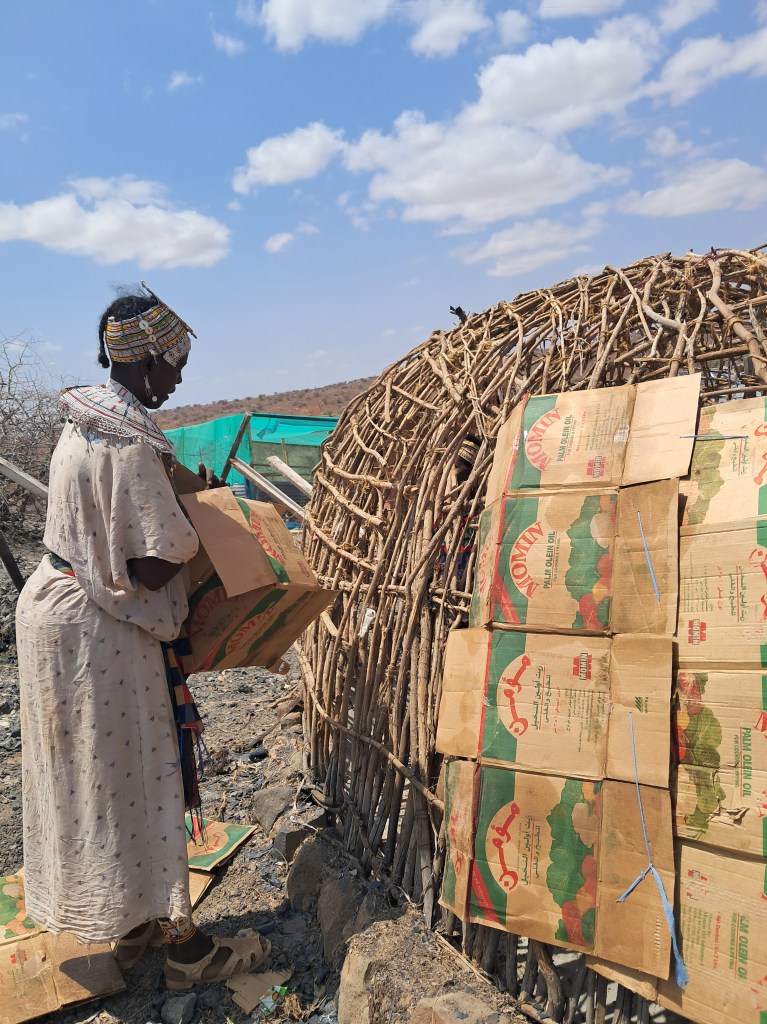
Eventually some mbate (aluminum sheet metal) was procured for the bottom half and the initial cardboard coating was ripped off in favor of the metal, the same sewing technique being used. We stomped on the aluminum first to make it more malleable, then used a nail and rock to poke holes in the appropriate places for the sewing to happen. D and I eventually left to “participate” in literacy class again and left the ladies to their construction.
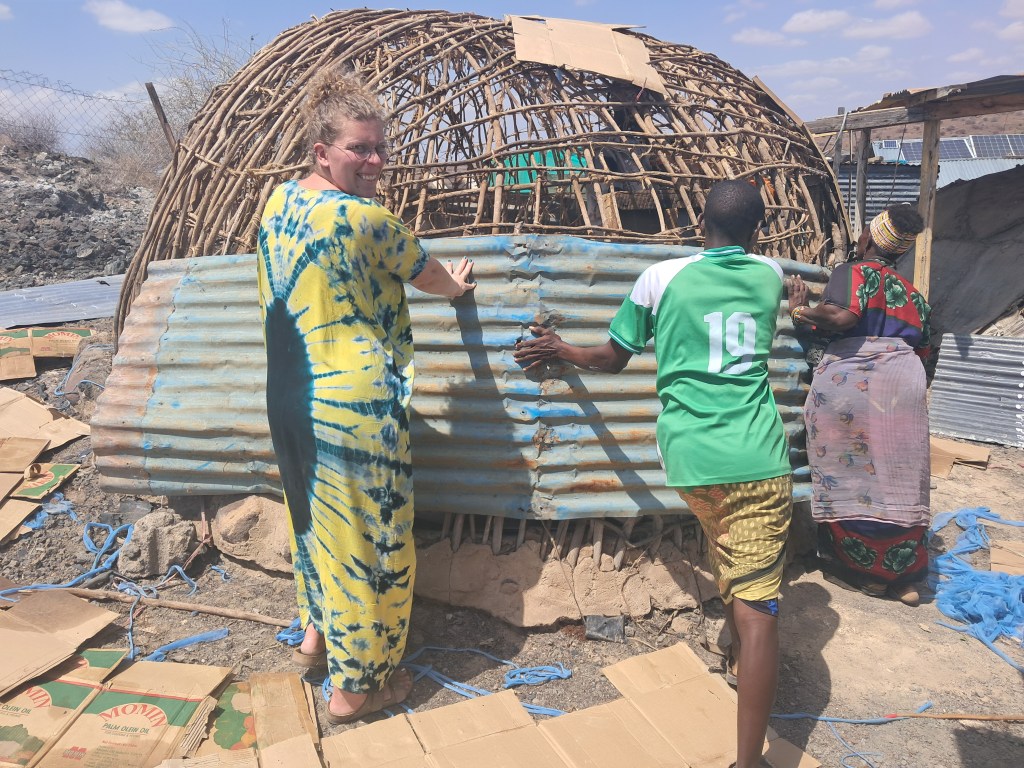
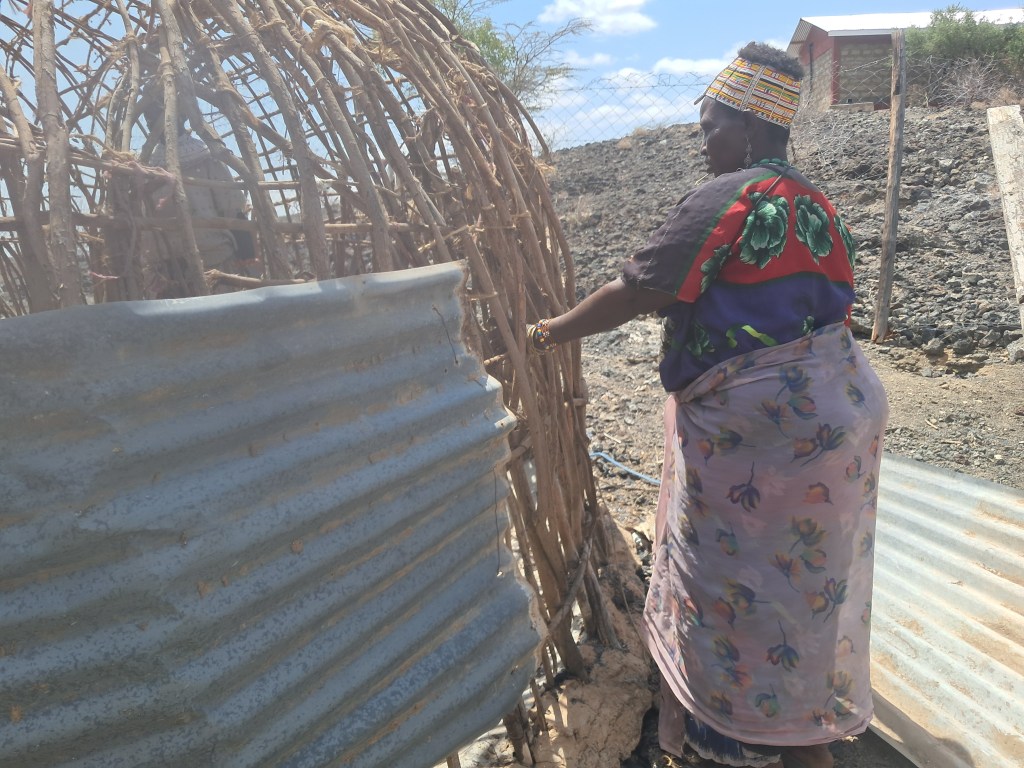
The next morning, Kubo was back when I returned from a walk in the desert. I sat inside the manyatta near her, watching the other women work as it seemed there wasn’t an easy job to take over at this point. I finally realized Kubo actually was working, stitching together with the same needle and mosquito net rope blankets for the final layer of covering. She graciously handed me part of the blanket so it appeared I had a job to do. One of the other ladies turned to me and said, “Leta keti.” I pondered my Swahili lessons. Eventually, I realized she wanted me to bring a chair! How nice of her to suggest I get a chair instead of sitting on the ground. I brought it in and sat down, continuing to watch from my new perch. About three minutes later, she shooed me out and took it to stand on so they could better reach the top of the manyatta. Hysterical laughter erupted as I realized she had wanted it for this use in the first place! The cardboard layer finished and the plastic water proofing layer was settling into place. Mosquito net ropes were attached to the edges of the 6-part blanket and used to guide this last layer into place. I’d been observing all day and hadn’t yet figured out who was in charge… it seemed that everyone’s opinion was equally valued, and equally used. This meant that something could be fully in place before one woman spoke up, and the other two would adhere instantly, even if it meant undoing 15 minutes of work to start a segment again. As we’d worked, the solar powered radio had the same seven minute song on repeat with rhythmic “heya-heya” running as the base line between soprano sung lyrics. Every few minutes, the ladies stopped working for an instant dance break necessary to disrupt the monotony of the work. Kubo attempted to coach me on the right moves, and laughed at my ‘strange’ movements as I danced side to side instead of front to back like they did. By the end of the day, the manyatta was complete!
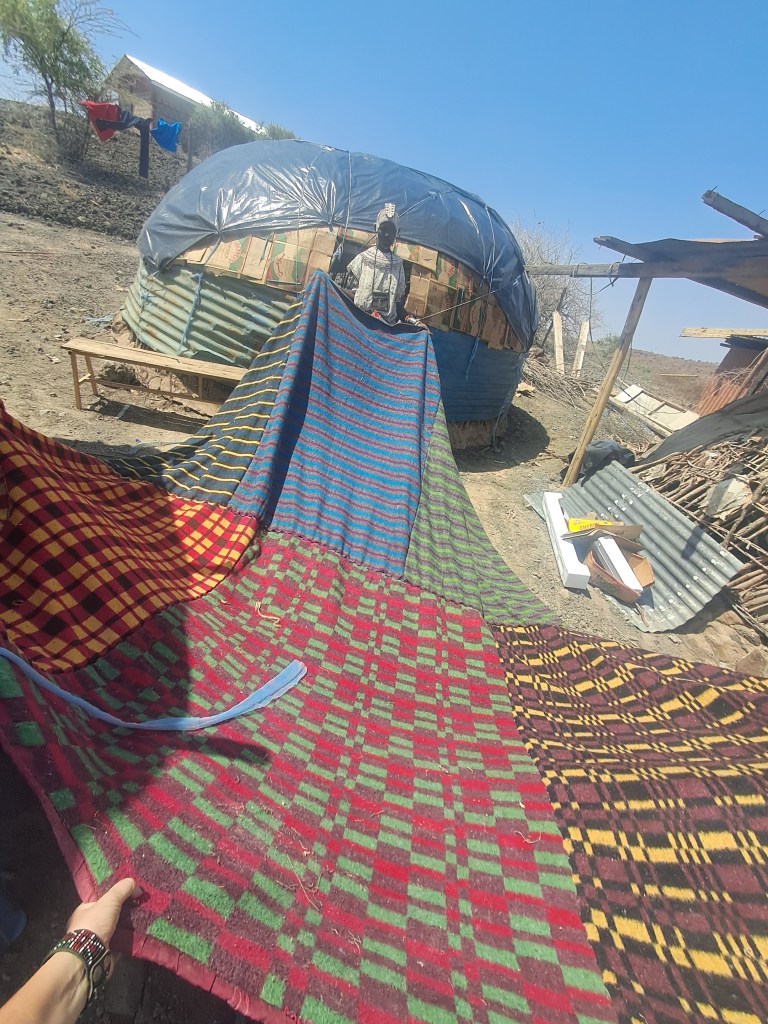
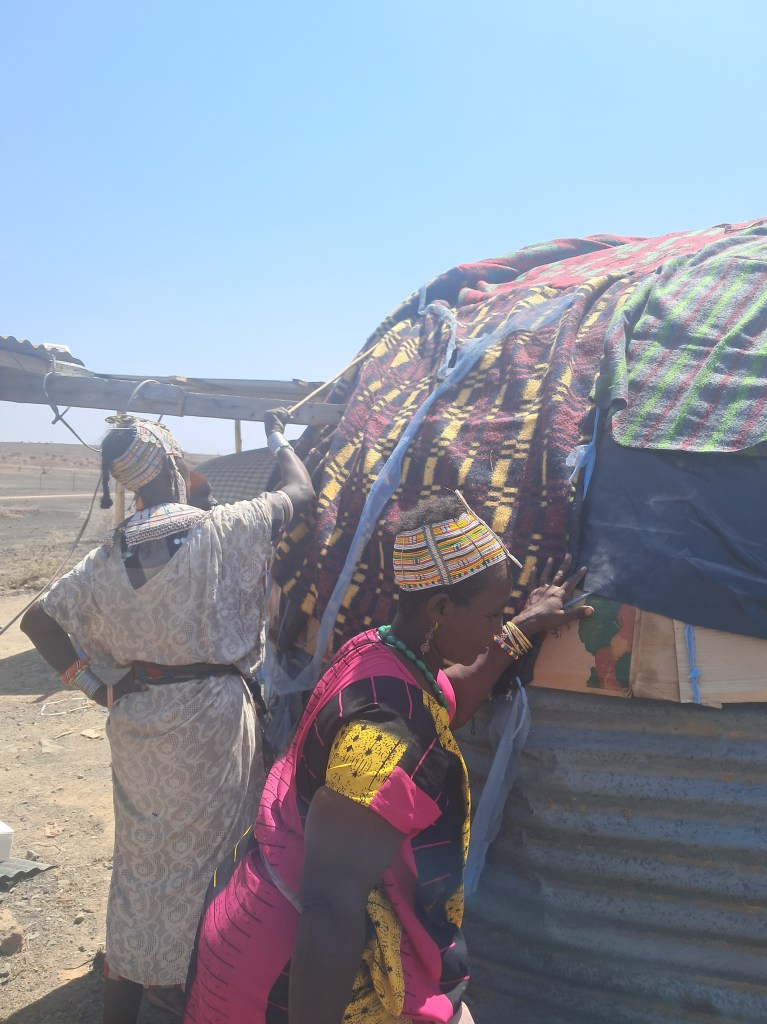
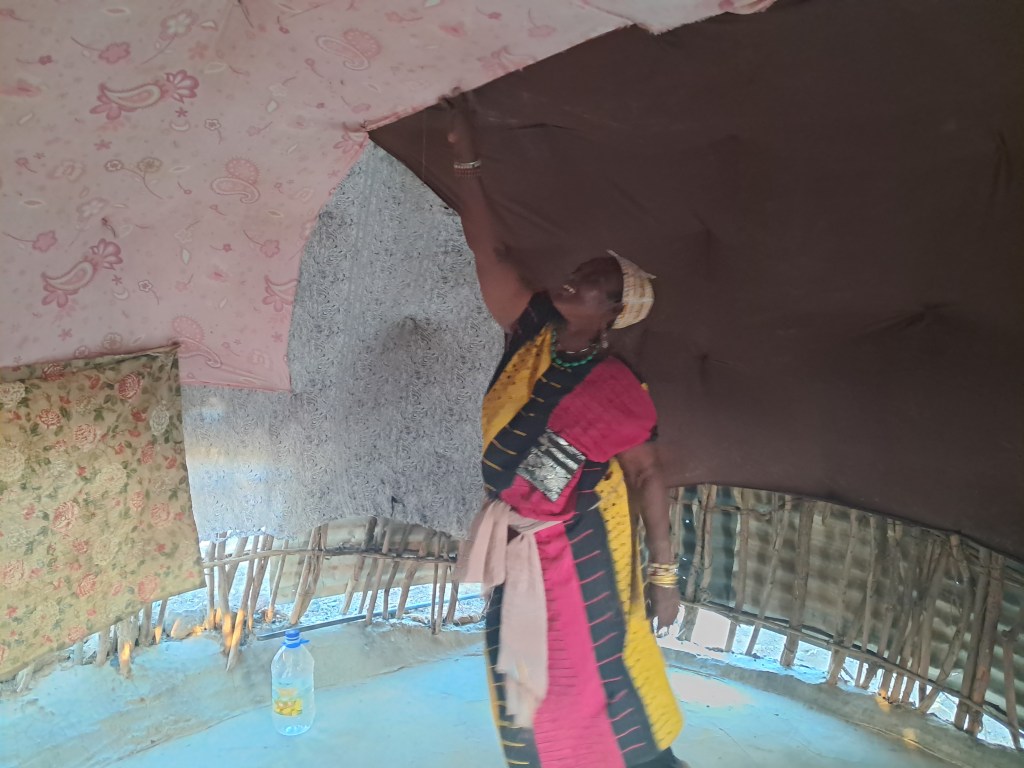
The next day, D took me on a piki ride to see the town. Walking would have worked just as well… there is not much town to see. We stopped to chat with people distributing meat that had been slaughtered, either a goat, or nearby hunted gazelle? And D negotiated a delivery to the mission station for our dinner. This one was goat, the illegally hunted gazelle we’d had for the first day of dinner had been a complete delicacy, and not the norm! We carried on our way, wandering through naked little children waving and shouting joyfully at the passing by mzungu (white person), not a common sight up here.
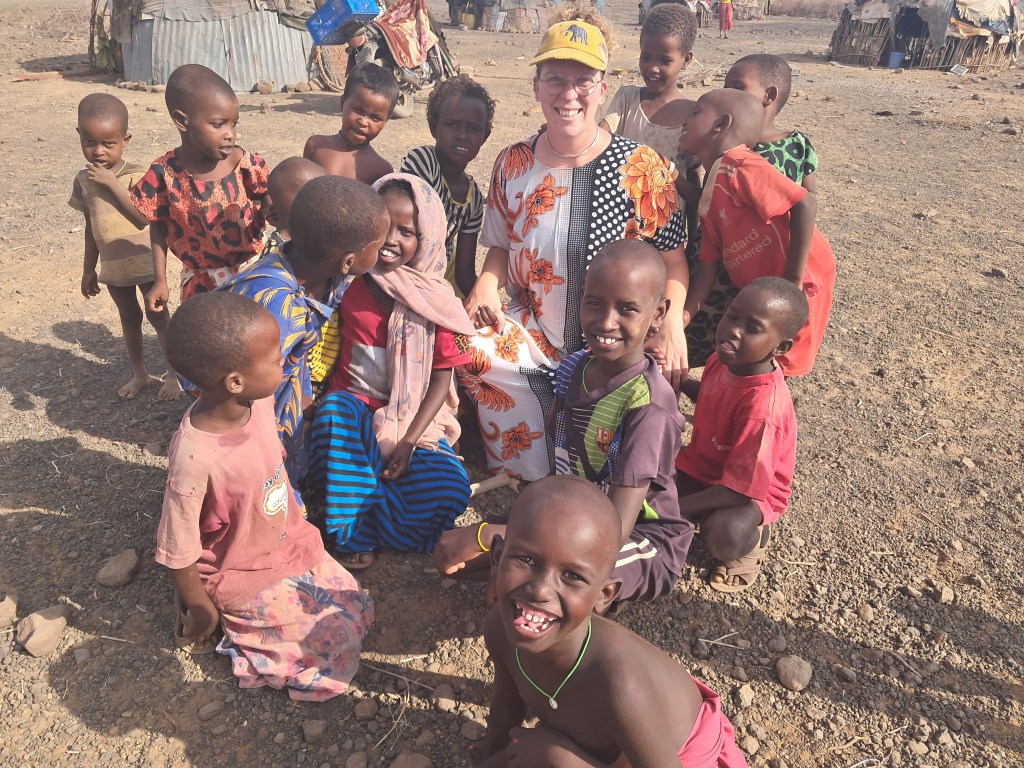
We arrived in a circle of manyattas and turned off the bike. A mama came out of the house nearby and greeted us, “Nebey nkadoo!” I issued the obligatory ‘nebey’ in response as an explosion of chatter intermixed with the word ‘mzungu’ followed. They were talking about me. A girl about 7 years old clung to her mother’s skirt, peeking out with tears of sheer terror rolling down her face. “Iko sawa…” its ok… I ventured, but D assured me that she only knew Rendille, not Swahili too, and that I was in fact the first white person this little girl had ever seen.
We wandered toward a nearby hut and Duncan asked me if I recognized the lady who stooped through the door. Nope. I didn’t. BUT WAIT, I did know that baby! I watched her sleep during yesterday’s literacy class on her mom’s lap! Ah. This is the momma, now a second lady I can look for a church on Sunday! Momma Juma. And look! There is Juma, not afraid at all, loving that the mzungu is coming to HIS hut.
I took off my sunglasses as I stooped inside the low hanging doorway and my eyes adjusted to see a small mattress, an area in the middle that clearly had a floor, a cook fire, somehow smokeless, warming a pan as Momma Juma prepared lunch. Juma clapped my hands to his, repeating any gesture I might make, giggling in glee with every glance I made his way, especially since there were almost a dozen of his peers blocking almost all the sunlight as they crowded in front of the door to get their own glimpse of this strange strange visitor.
The next day was Saturday, typically the day the Compassion International program would run. Yes, that Compassion! This place I was visiting has a Compassion ‘project’ that is run and operated under the oversight of D. His job is coordinating logistics with the greater organization, leading meetings with the employees who also stay in this 6-building mission station, the parents, community board, etc. I had been so excited to see the program in action since I’d sponsored a child with compassion with my small group in high school, but unfortunately, the social worker and program director had been called away for meetings. The more I learned about how this organization operates on the ground, the more impressed I’ve become!
Every Saturday the children participate in the program which provides a meal and programming, teaching them about things like social, emotional, and mental health on top of the Bible curriculum. Over 200 children are enrolled in the program at this location, and there are over a dozen similar projects run out of other local churches in this county of rural Northern Kenya. Regular parent meetings begin with a gospel presentation before getting to the nitty-gritty details of business that may need to be taken care of, a rare opportunity for D to engage with the men of the community.
I did however, get to witness “PPI.” We have this at RVA too, we just call it flag raising and chapel! Not quite the same as the program I’d been excited to witness, but still a joy to see the children as D presented the bible story, leading the kids in a time of praise, worship, and praying together. “This is the future of the church.” D had declared. “They need to know God’s love now, as they are the ones who will grow up and fill the church someday.”
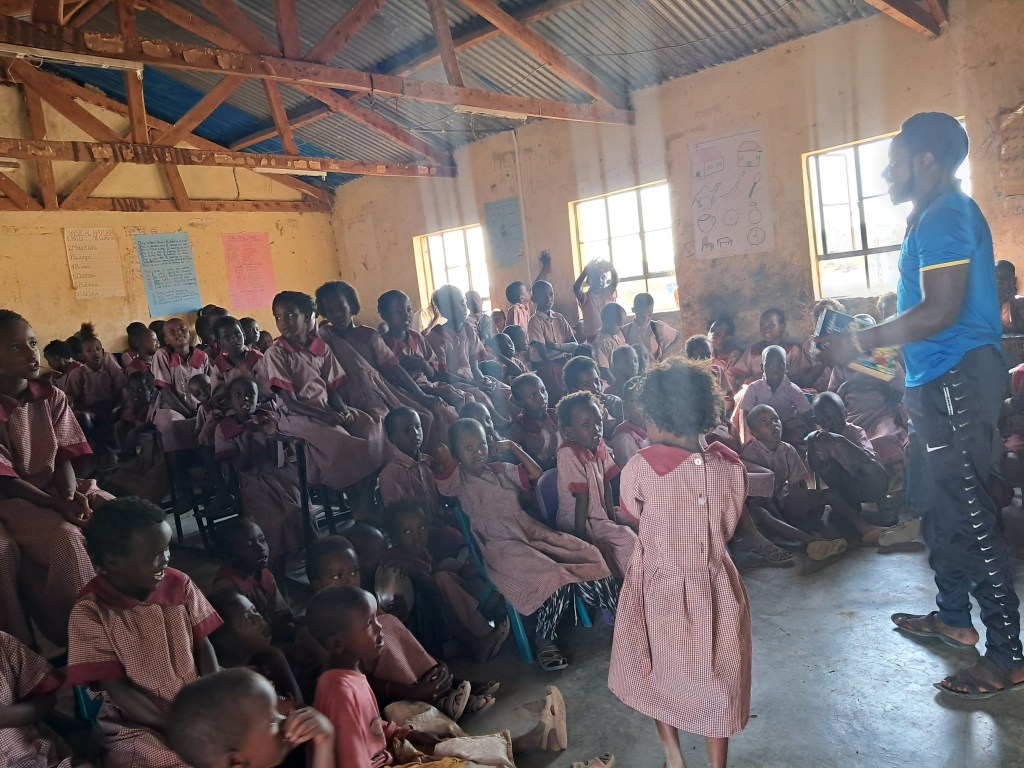
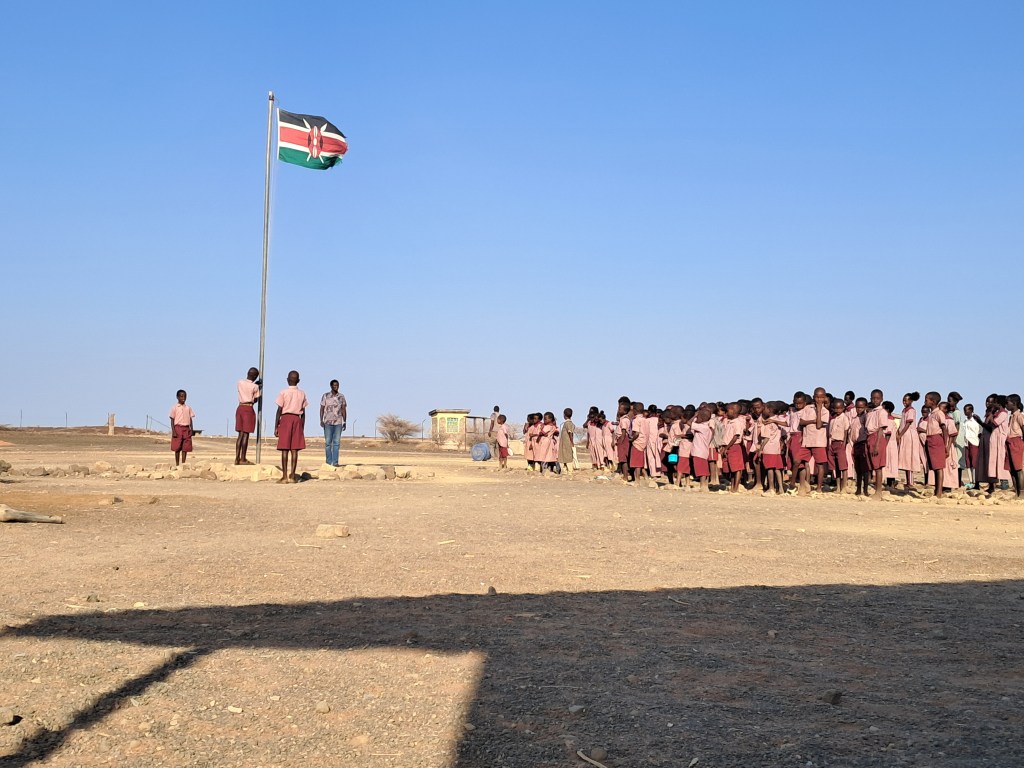
I got to see some of these kiddos again at Church on Sunday. A few were there early and I enjoyed playing on the swings with them, counting each push before moving to the next girl! I learned their names, then promptly forgot them… except Juma! It was the same little boy from the manyatta, still just as excited to be able to play with me. I kept my eye out for Kubo, hoping I’d get to see her too at church today!
The service began and a round of call and response singing flooded this small structure with the sound of worship. The leader rotated around the room depending on what song was being led, from the oldest of congregants to a young pre-teen, changing with each song who was in charge-there’s Kubo! Wandering in late once more, just in time to take up her own round of call and response. The second literacy class teacher, B, led the congregation of women and children through the service. D had told me about his transformation when he had encountered the gospel, setting aside drugs to be baptized and now heavily involved in the work of the gospel alongside D. Announcements began and I searched the crowd for familiar faces. I smiled wide when Kubo stepped to the front and clearly began an introduction of me. At the prompting of D I joined and greeted the church, excited that already, by Kubo’s presence I felt known.
After the three quarters of the congregation were released for Sunday School, the praise and worship continued with dance. D later heard me describe it as a ‘dance break’ and quickly corrected me, “No. It is not a break, the dancing is PART of the service.” Try explaining THAT to my Baptist heritage! I’d grinned as Kubo had looked RIGHT at me and gestured for me to join her. I officially love having dancing as part of a church service, even if I don’t quite know how to bob my head and move my chest the same way the ladies there do.
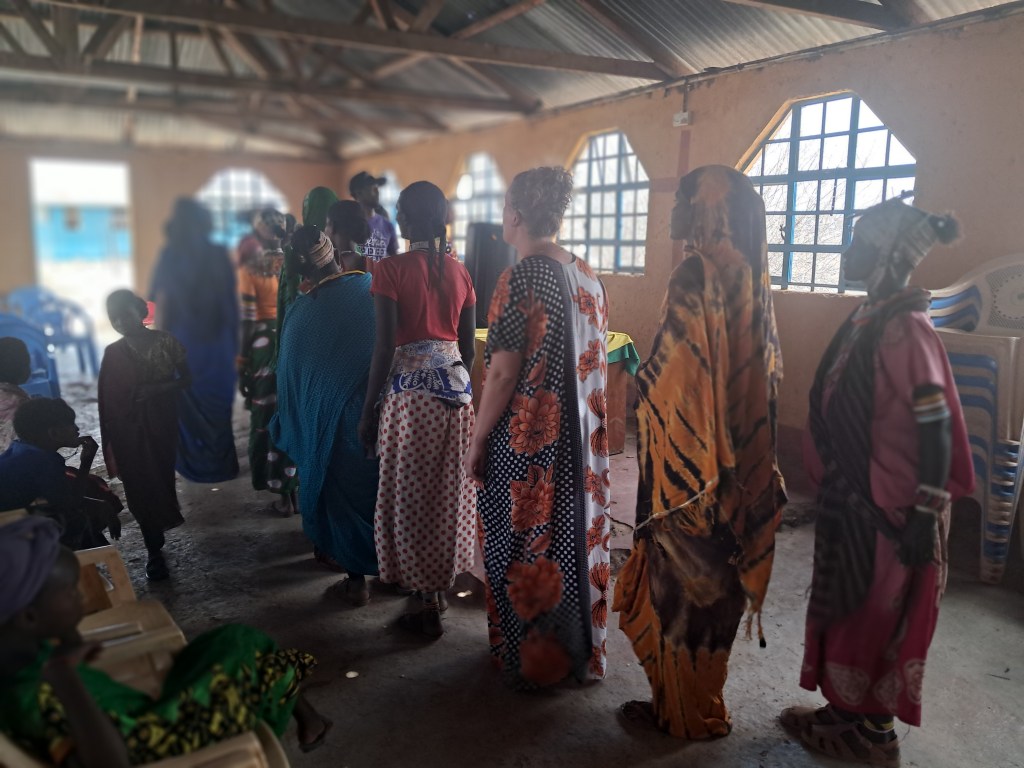
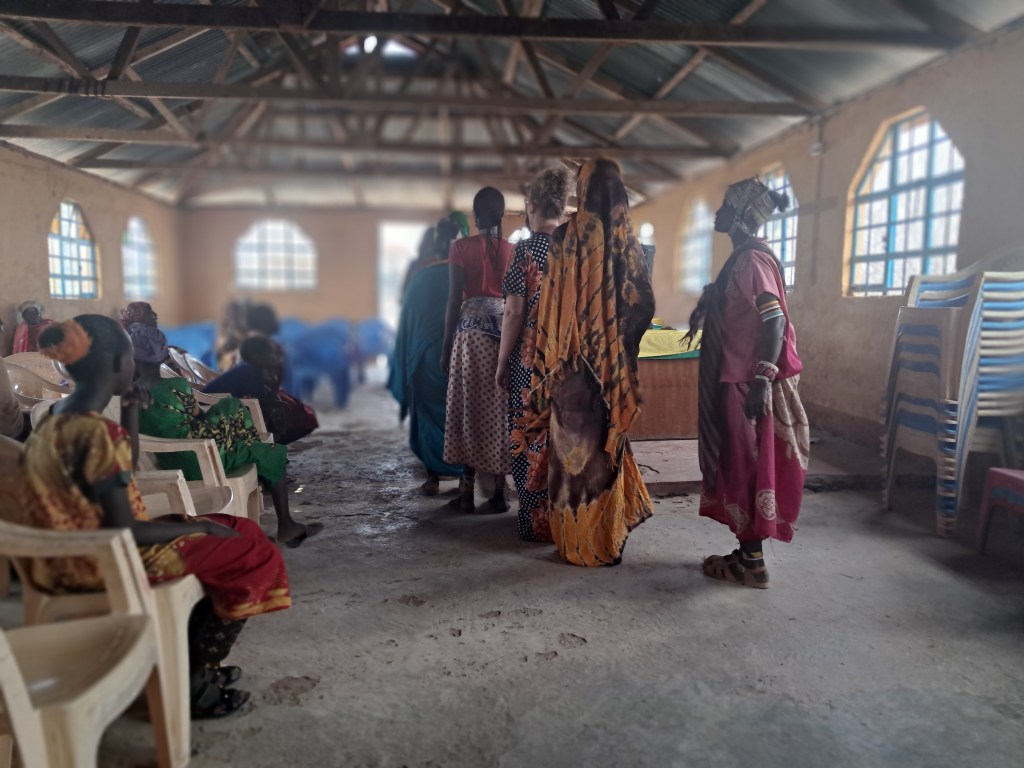
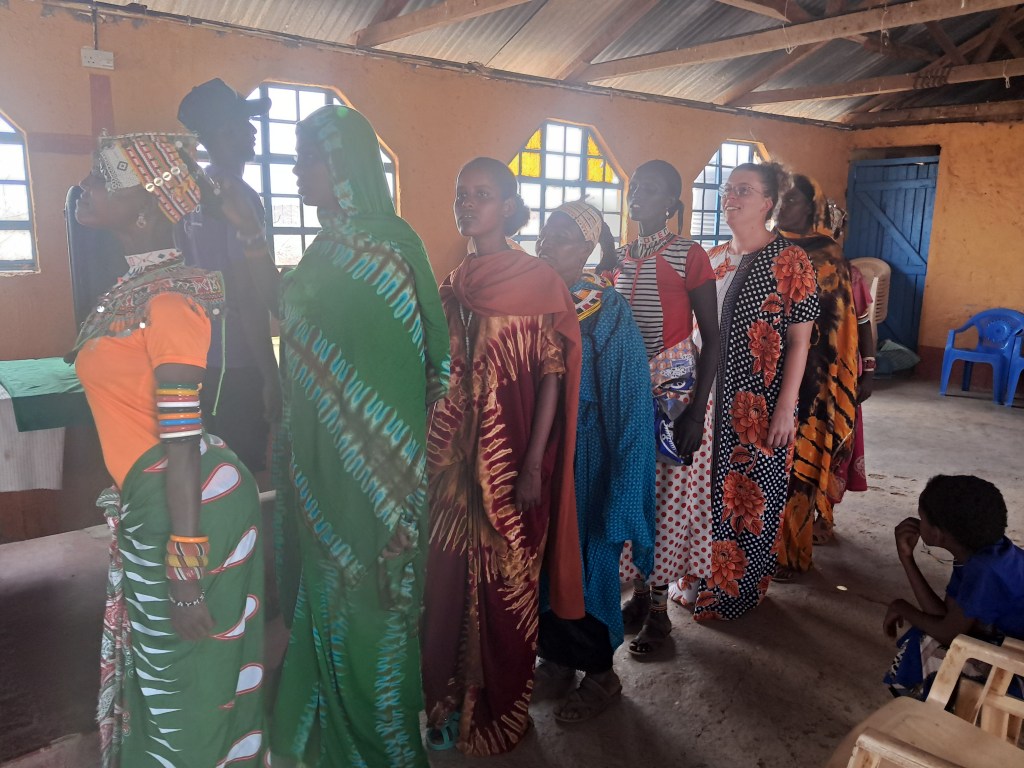
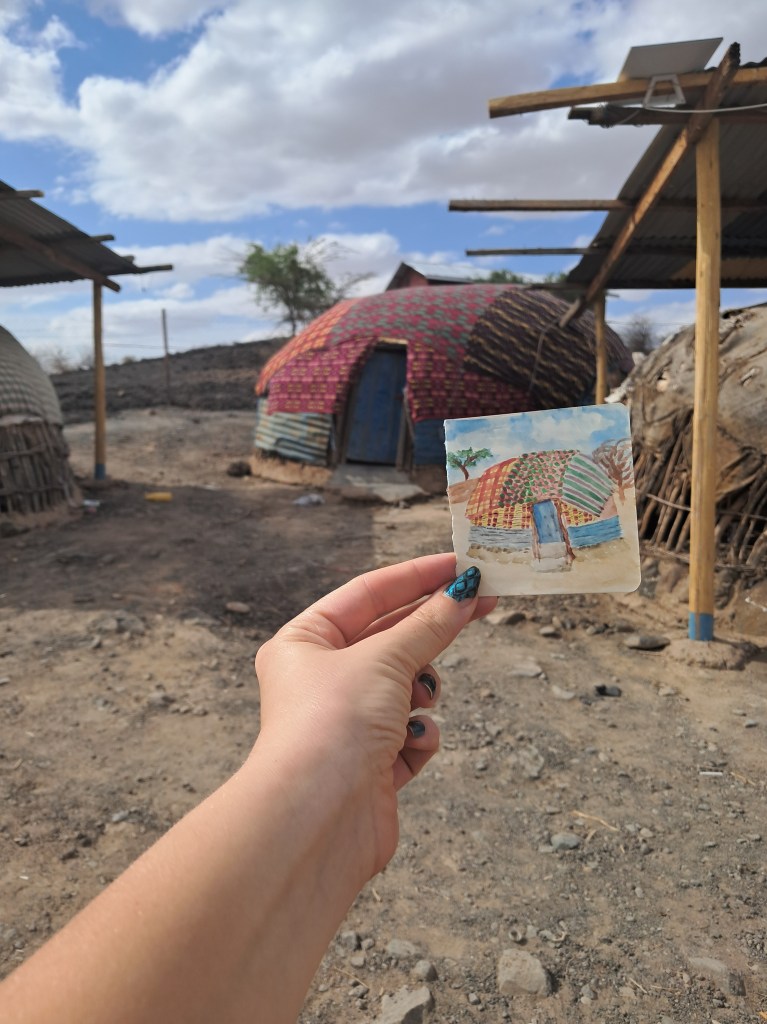
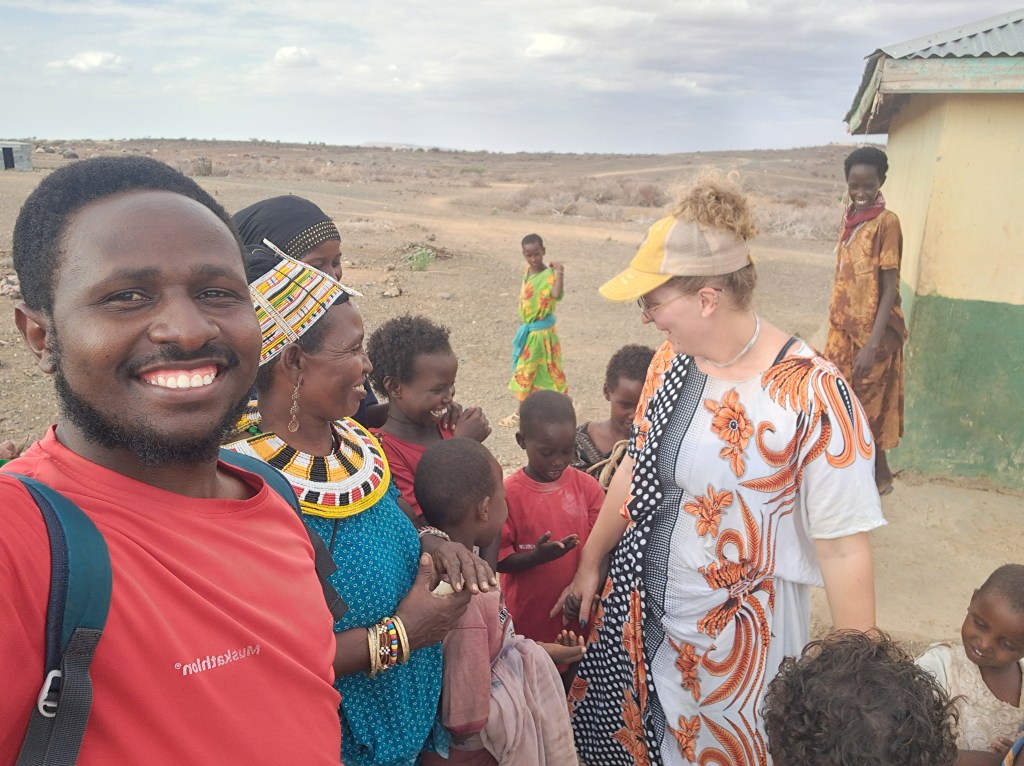
After lunch D and I began a walk to one of the far villages. Kubo had invited me to visit her home while we’d been building together. She had both a manyatta, and a permanent home that her brother-in-law, an MP in the area, had built on her behalf. I learned that Kubo’s husband had died about two years prior, and that she was one of the faithful members at D’s church. She has eleven children, one I recognized instantly as the brave teen girl who had sat RIGHT next to me at church just hours before. We found Kubo at her manyatta, and as we wandered towards her house I slowly collected the entire village worth of children, clinging to my hands, brushing my arms, and studying their hands to see if the white color of my skin wiped off onto theirs. We sat in her living room on a couch, village children poking their head in every door and window, Kubos children staring from the room off to the side. She emerged a few minutes later with me a sweet beaded necklace in her hands that she clasped around my neck, and I pulled out of my bag a little painting I’d made for her the day before of the manyatta we’d built together.
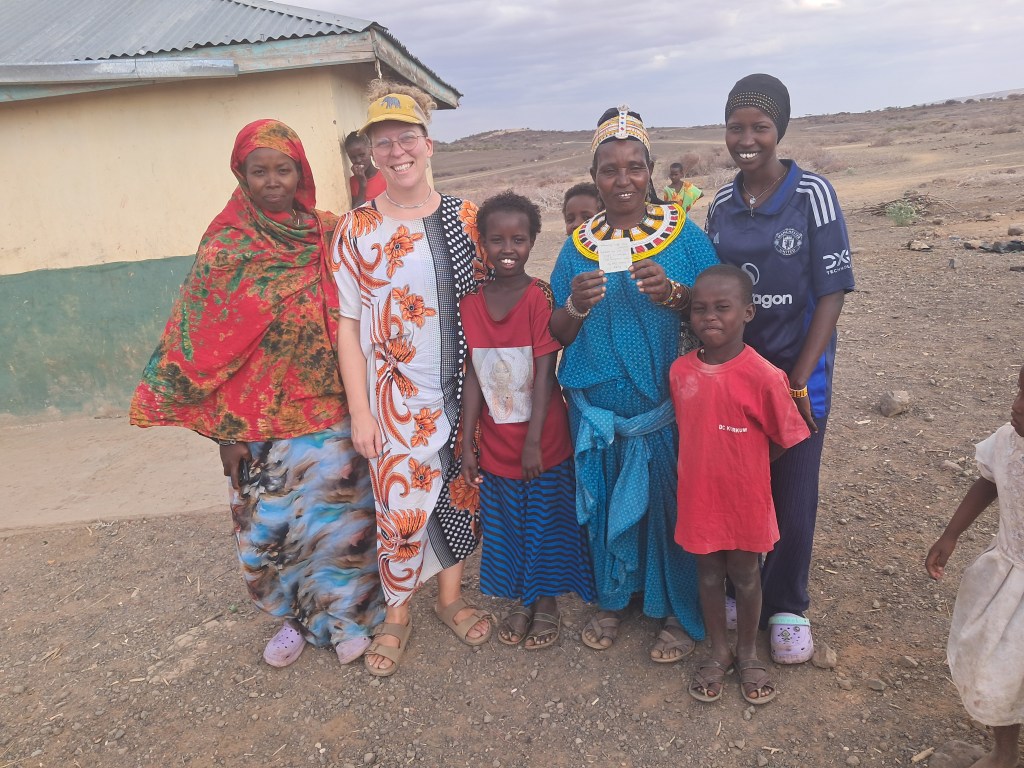
Eventually we parted ways, children lingering at my fingertips as we walked back towards the mission station. I’d just said goodbye to my new friend, wondering if I’d get to see her again as I would be leaving early the next morning. I marveled at the love of Christ I saw in her, and the joy I found in so many of the children. My heart yearned for more and more of them to know Jesus, thankful that I had gotten to see Him at work in this place. I felt a little like the women of the literacy class learning to read for the first time, pushed out of my comfort zone time and time again. I came wanting to be part of the ministry but left feeling like in that brief time all I really got to do was watch, learn, and see as my own eyes were opened to the fingerprints of God making a difference in the lives of these people through literacy classes, joyful fellowship of women working together, small children singing praise and worship, and women dancing in the middle of a church service, all to the praise and Glory of God.


In the West the belief tends to be that God loves the rich. However, when on travels the world they see that God loves all people, no matter their back ground or current status. He loves them and calls them to himself. And many are worshiping at the foot of the cross just as we did growing up in a Western church, all worshipping and serving the same God. Yes, “Jesus loves the little children, all the children of the world”.
LikeLiked by 1 person
In the West the belief tends to be that God loves the rich. However, when on travels the world they see that God loves all people, no matter their back ground or current status. He loves them and calls them to himself. And many are worshiping at the foot of the cross just as we did growing up in a Western church, all worshipping and serving the same God. Yes, “Jesus loves the little children, all the children of the world”.
LikeLiked by 1 person
Thank you for sharing! Praying with increased awareness!!
LikeLike
Thank you Cindy!
Wishing you were still here! I hope you’re LOVING your time back with your family!!!
LikeLike
Thanks, Amy! I still read the WhatsApp messages and miss all of you, too. My time with family has been wonderful. I’m finding more things to do at our church! This evening, my daughter is being ordained a Wesleyan pastor. So excited!!!
LikeLike
Greetings Amy,
This sounds like an amazing experience; one we do not get while at RVA. Blessings as you continue to serve!
Blessings,
James Myrick M.Ed. TCK Educational Consultant AIM.UShttps://us.aimint.org/ 816.213.6458 tckeducation.us@aimint.org ________________________________
LikeLike
Thank you James! It really is amazing to see God’s work in other places!!!
LikeLike